
Currency Swaps: A Short Tutorial
Instruments of Financial Stability with Benefits

A few weeks ago, the United Arab Emirates, one of the richest countries in the world, reportedly asked for a currency swap line from the United States. At the same time, Secretary of Treasury Bessent is proposing the increased and wider use of dollar swaps lines as instruments of the dollars global influence. In order to understand such an unexpected request, we have to understand currency swap lines and their purpose.
A currency swap line is an agreement between two official financial institutions to exchange a fixed amount of currencies at a fixed rate for a fixed period. Usually, the transaction is between central banks, but in some cases like the U.S., the swap line issuing body can also be the U.S. Treasury. An example of a one-year $-£ swap line, the Federal Reserve Bank (Fed) will offer, agree to buy £100 million today and unwind the transaction in one year at the same rate.
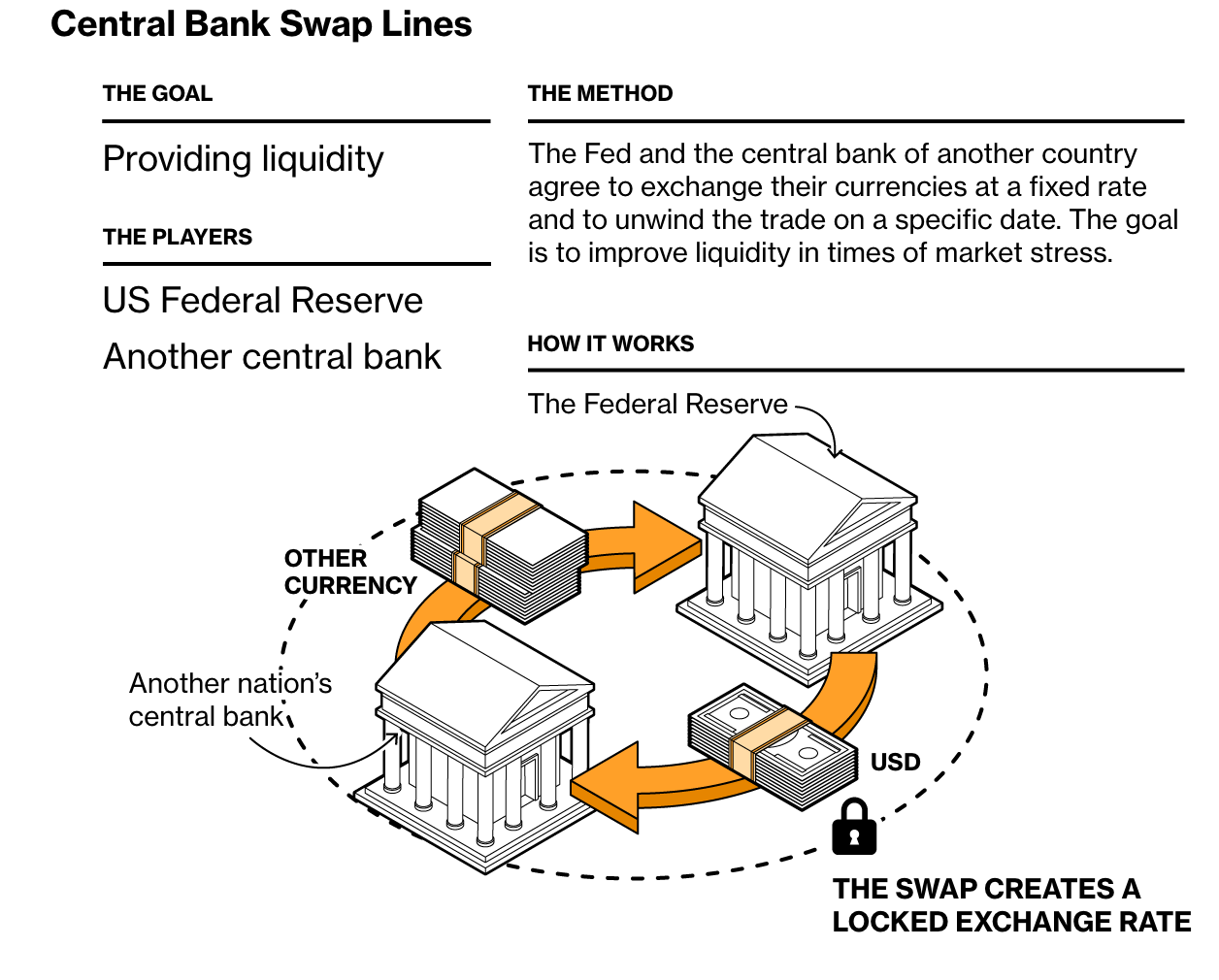
Currency swaps are usually issued in times of financial stress to alleviate foreign currency liquidity problems. Following the 2008 global financial crisis, the Fed extended dollar swap lines to the major central banks to ensure global dollar liquidity. Moreover, the Fed has in place long-standing dollar swap lines with the major monetary authorities(the European Central Bank, the Bank of England, the Bank of Japan, the Bank of Canada, and the Swiss National Bank).
Keep reading with a 7-day free trial
Subscribe to Random Access Economics to keep reading this post and get 7 days of free access to the full post archives.